The last year of my life was crazy, difficult, life-changing, and a lot of words I'd rather not put on this blog. I can't say that I'm sorry it's over, but I've learned a lot and I've re-examined my life in a serious way.
So where am I now? Better. I'm better able to react to my family, to the difficulties of life, to the stress of being in a graduate study while getting divorced/coming out/going through serious challenges to my faith. It's not as if I've processed any of those things completely, but the intensity, fear, and panic have subsided to give place to calm, reassurance, patience, and faith that things will indeed get better.
But they aren't easy. And whenever I think life is suddenly perfect, something happens to set things askew again. I wonder if that is by divine design or simply part of just existing and being in the world. But I digress.
Getting back to the point, I ask myself, where am I now?
One of the most pressing issues on my mind right now is, what is my future relationship with the LDS (Mormon) church?
From an identity, cultural aspect, I can say I'm a Mormon with confidence. My ancestors crossed the plains, came over sea to go to Utah. My family is Mormon. I get being Mormon.
From a belief point of view, I have a harder time. I sometimes apply words like "heretic" "unorthodox" "crazy" and "queer," to myself. (and yes queer is supposed to have a double meaning.) But I don't know how well my beliefs match up to any sort of belief system or dogma. I'm pretty open minded. Some of my beliefs match up nicely. Others (including marriage equality) do not.
From a behavior point of view, I'm not so Mormon. It isn't as if I went off the deep end or anything (although drinking coffee is pretty crazy man, I was wired for like 2 hours!). But joking aside, I don't feel the same sort of obligation as I did before to follow the rules. That isn't to say the code of conduct isn't admirable, and even healthy. I still feel some guilt from time to time, but I guess the way I view my behavior is different. Maybe this goes more with belief, but my behavior and the way I view my behavior is a lot different. Part of this is to give myself the freedom to explore relationships. And part of it is a natural process of questioning faith, that I think is healthy. I fear that many people, when they come across things that challenge their faith, abandon the structure as well. But some of those things are really healthy safeguards to health, happiness, and mental sanity. I think it's best to strike a balance, not getting overwhelmed with guilt which I no longer view as wrong, but also not just saying it's alright to do whatever now that I'm not as orthodox.
But moving beyond the "Do not" or "Thou shalt not" category of Mormonism, there are a lot of things I don't do that Mormons often do. I don't go to church, I don't pay tithing, I don't do home teaching, I don't go to Ward socials, I don't read scriptures. I do pray. I do meditate and study. I do try to treat others kindly. I do reflect on Christ's teachings. I even believe that most if not all of what "the Brethren" say is for the good of humanity. There are some disagreements I may have, but I can completely support husbands treating their wives with respect, love, honor. I can support honesty, and integrity. I can get behind service and charity.
In many ways, I wish I could be a full fledged Mormon. I was comfortable in those shoes. And even if I was a bit non-traditional, it wasn't until the "cognitive dissonance" (see here) of feeling inadequate, left out of the plan of salvation, discriminated against, hated, ridiculed (none to my face, just people saying things unaware) that I really started to question my participation at church. It makes me wonder if having an at church coming out would help. I don't know. I don't know what if anything to say to my new bishop (apparently the ward split on me while I was "away"). But I wonder if I could go to church, participate in the things I like, ignore the things I don't. I'm a lot less delicate now that I've had some time to grieve the loss of my marriage, and grow into my own skin. I guess the question is what if any value will I derive from it? What harm, if any, could it do, does it do? I think if it's not helpful, there really isn't a reason to go, other than to help those that are struggling, questioning, believing they are alone. They aren't.
One issue is if other people will accept me as Mormon. I'm not as worried about this as I used to be. A more important issue is how I view myself. What does it mean to me to be Mormon? How am I a Mormon? Why am I a Mormon?
Another is my formal standing with the LDS church. I don't often go to church, but do I want to? Partly yes. What do I say to my bishops, EQP's, etc. It seems the "I'm gay" works pretty well for keeping them at bay. It's sort of like, "oh well we get why he doesn't go to church?" Isn't that kind of unfortunate? I mean it's sort of nice to be left alone, but sort of diconcerting as well. As if they don't really see where I would fit either, or they would rather just let it go than question why things are the way they are. I would like to be accepted by them. And maybe this is something I should give up. Because it doesn't matter anymore whether they accept me. Still, no one likes to feel ostracized and rejected for who they are. There is a strong tendency and pressure to conformity, and being a gay liberal Mormon makes it difficult to fit in. I think trying to fit in can be extremely harmful in this case, especially given the harm it's done to me trying to do so in the past.
I believe though that the church is not the enemy. You could argue the institution is in some sort of vague sense, but even then, I have to be fair and say they do as much good as harm, at least from my perspective. Once I let my anger subside a bit, I've come to recognize this more and more. And no person is at fault really for the problems. No one in the day to day church is at fault for historical inaccuracies, prejudice, racism, homophobia, patriarchy, sexism, heterosexism. These are cultural forces in all society, that unfortunately are uniquely concentrated within a Mormon context, and even sometimes backed up by "doctrine" (although this point is debatable. One could say that any statement supporting these things is not doctrinal. After all Christ was an example of love and compassion, none of these things). I have to say, living in California instead of Utah, racism, homophobia, and even patriarchy are not as widely practiced or accepted. The liberal Mormons I come across are great people, and people I could unite in heart and soul with. I just don't know how exactly to band them together with them in a meaningful way without the conservative orthodoxy getting their knickers in a bunch. I suppose blogging, Mormon Stories, et. al. is a beginning step. And I really appreciate it. It means a lot to me to feel part of the tribe again instead of cast out, for something largely if not completely outside of my control.
Sunday, January 8, 2012

Tuesday, November 15, 2011
Circling the Wagons
I had the opportunity and privilege to go to the "Circling the Wagons" conference put on by Mormon Stories. I flew in from California on Friday night and made it to the session amid the snow the next day. The conference was by far better than I even imagined.
Ten years before, just after turning 18, I went to the Evergreen International Conference with my Dad, around the time of September 11th. We had to drive because there were no flights available. This was my first experience being a "Gay Mormon" and meeting other "strugglers." Evergreen has it's place. I feel like many that it is unfair to talk totally negatively of the experience of for the first time in your life having a space to talk, to vent, to share with others.
The problem is the misinformation there. See at this conference "experts" like A. Dean Byrd told me that homosexuality was in fact a mental illness, that if not curable, was treatable by therapeutic means. Research had been done that showed that homosexuality was most likely caused by several factors, but possibly by an absent father, an overbearing mother. He and other panelists waxed on and on, peddling their wares about how they could change us, help us "diminish our unwanted feelings of same-sex attraction", help us to get married heterosexually, etc.
What a contrast, to step into Salt Lake, ten years later, in the early snow of Autumn, to the First Baptist Church, and meet my true brothers and sisters, straight, gay, bisexual, transgendered, queer, SSA, whatever they preferred to identify as, and simply be with them, in the open, talking openly and freely about our feelings, our worries, our pains, was incredible. We talked about the real pain that we had felt being gay and Mormon, seeking to bridge understanding between allies and LGBT members. In reality it isn't an us and them thing. We were all there together questioning, thinking what can we do, right now, to make our lives and the lives of those around us better.
Carol Lynn Pearson's gave a talk about the hero's journey, how we as gay members of the church or just gay people in general had been called to a journey, refused the call, been initiated or forced to adventure, and then to take home what we said. For those unfamiliar with Joseph Campbell's work that was the source for the talk, think of it as being Luke Skywalker, on the desert in Tatooine, unaware that an adventure was to be had. Lucas followed Campbell's model and created Star Wars. We as gay men and women are like Luke Skywalker, thrust out onto an adventure we didn't choose but that we have to face all the same.
As Lee Beckstead put it, you all prayed and fasted to overcome being gay. Let them pray and fast to cure their Homophobia. Homophobia is curable. Homosexuality is not. People are often too afraid to learn the truth about homosexuality, deal with their own inadequacy or their own fear of difference, their homophobia (fear of gay people: let's call it what it is).
The other talks and panels were helpful as well. Lee Beckstead's talk was about bridging and navigating conflict with our communities and with our families, and this was an important theme and one that carried into the panel discussion. As Carol Lynn Pearson said, the truth is that people should not have to choose loving their son or daughter or the church, that this needs to end and stop immediately.
I was inspired. The musical numbers, the visiting bishop's testimony, the testimony's/testimonials at the end. There was an amazing spirit of love, tolerance, and true Christian worship there in a Baptist church in Salt Lake. And that's something I can be proud of when I say I'm Mormon. And it's something that can lead me to say I'm proud that I'm a gay man. I'm grateful that I have so many wonderful brothers and sisters who love and support me in being who I am. For not having to hang my head or be ashamed for existing, or loving or being attracted to people who happen to be of the same gender as me. It was....wonderful.
Ten years before, just after turning 18, I went to the Evergreen International Conference with my Dad, around the time of September 11th. We had to drive because there were no flights available. This was my first experience being a "Gay Mormon" and meeting other "strugglers." Evergreen has it's place. I feel like many that it is unfair to talk totally negatively of the experience of for the first time in your life having a space to talk, to vent, to share with others.
The problem is the misinformation there. See at this conference "experts" like A. Dean Byrd told me that homosexuality was in fact a mental illness, that if not curable, was treatable by therapeutic means. Research had been done that showed that homosexuality was most likely caused by several factors, but possibly by an absent father, an overbearing mother. He and other panelists waxed on and on, peddling their wares about how they could change us, help us "diminish our unwanted feelings of same-sex attraction", help us to get married heterosexually, etc.
What a contrast, to step into Salt Lake, ten years later, in the early snow of Autumn, to the First Baptist Church, and meet my true brothers and sisters, straight, gay, bisexual, transgendered, queer, SSA, whatever they preferred to identify as, and simply be with them, in the open, talking openly and freely about our feelings, our worries, our pains, was incredible. We talked about the real pain that we had felt being gay and Mormon, seeking to bridge understanding between allies and LGBT members. In reality it isn't an us and them thing. We were all there together questioning, thinking what can we do, right now, to make our lives and the lives of those around us better.
Carol Lynn Pearson's gave a talk about the hero's journey, how we as gay members of the church or just gay people in general had been called to a journey, refused the call, been initiated or forced to adventure, and then to take home what we said. For those unfamiliar with Joseph Campbell's work that was the source for the talk, think of it as being Luke Skywalker, on the desert in Tatooine, unaware that an adventure was to be had. Lucas followed Campbell's model and created Star Wars. We as gay men and women are like Luke Skywalker, thrust out onto an adventure we didn't choose but that we have to face all the same.
As Lee Beckstead put it, you all prayed and fasted to overcome being gay. Let them pray and fast to cure their Homophobia. Homophobia is curable. Homosexuality is not. People are often too afraid to learn the truth about homosexuality, deal with their own inadequacy or their own fear of difference, their homophobia (fear of gay people: let's call it what it is).
The other talks and panels were helpful as well. Lee Beckstead's talk was about bridging and navigating conflict with our communities and with our families, and this was an important theme and one that carried into the panel discussion. As Carol Lynn Pearson said, the truth is that people should not have to choose loving their son or daughter or the church, that this needs to end and stop immediately.
I was inspired. The musical numbers, the visiting bishop's testimony, the testimony's/testimonials at the end. There was an amazing spirit of love, tolerance, and true Christian worship there in a Baptist church in Salt Lake. And that's something I can be proud of when I say I'm Mormon. And it's something that can lead me to say I'm proud that I'm a gay man. I'm grateful that I have so many wonderful brothers and sisters who love and support me in being who I am. For not having to hang my head or be ashamed for existing, or loving or being attracted to people who happen to be of the same gender as me. It was....wonderful.
Thursday, November 3, 2011
Reparative/Conversion Therapy
I watched this video and it made me cry. It was available on a link from the Huffington Post.
This case is extreme. I doubt very few parents would do this to their children simply because they are gay. I doubt very many therapists would do this to their client to cure them. But in the 1970s and apparently in some rare cases today, these techniques are used to "cure" individuals.
This is the heritage of NARTH, Evergreen, and other groups. The beginning of reparative therapy is Electroshock techniques, torture, and violence. Evergreen and NARTH et. al. want to forget the history of their craft, to change and convert sexual orientation. The history of violence against people because they don't fit the mold. This is the reason the APA took homosexuality out of the DSM-IV, not because of the political pressure as A. Dean Byrd and others claim. Homosexuality is a variation of normal. Deviancy, crime against nature, this is the rhetoric used to attempt to force bodies and psyches into conformity with a norm. But it doesn't work. And even if it did work, if we could find a cure to homosexuality, it would be unethical to force or coerce children, or anyone, into a therapeutic program they didn't want.
No one listened to me. I told the therapists when I was 17 I was gay, I wanted to be with a man, but not one of the LDS therapists my bishop sent me to and paid for listened to me. But at the time, unsure of what to do, unsure of how to handle telling my parents, I continued. I eventually told my parents, they took over paying for therapy, and I continued to suffer being told over and over I wasn't gay, I was going through a phase.
I found Evergreen. I thought I'd found an answer. But I found instead empty promises, testimonials, and confusion.
It's unethical to lie to people to promise a cure. Notice that everything that Evergreen does is anecdotal. No reputable journal will support reparative therapy. Why? Because there is some sort of liberal bias that wants to show that homosexuality is normal?
Hardly. I suppose there is a bias, a bias that LGBT people are normal and not freaks or deviants. But that's a bias that I can get behind. I suspect however that if the techniques were effective, there would be a much different debate around the issue. But they don't work. This is complicated, but Lee Beckstead's research (see ldsresources.info, google or look up his articles otherwise) shows that it is usually harmful.
Since many people operate if not totally objectively, then according to reason, scientific evidence, psychology, the world at large, not some oligarchical liberal conspiracy as Byrd and others claim, is responsible for helping people accept homosexuality as a variant of normal.
And to Evergreen's anecdotal evidence of change, I offer my own counter evidence. Case histories are a valid means for establishing social work/therapeutic techniques. But there are thousands of case histories of LGB individuals in therapy because of religious bashing, trying to pray the gay away, trying to undergo a psychic transformation. I tried it. It hurt me emotionally. It hurt my faith, my relationship with my family, the relationship with my now ex-wife, my relationship with friends. It hurts to be told over and over again that something is wrong or broken with you, to pour your soul out before God to heal you make you whole. But I was never broken. I was just me. I was just different, not deviant, evil, wrong. It isn't my fault that I'm gay. It isn't a choice. It isn't a whim. It isn't something I just woke up one day and said, you know what, I'd like to ruin my parent's dreams and my own of who I want to be and what I want. I'd really like to screw up my life now. I'd like to according to what I believe condemns myself to damnation, suffering, spirit prison, an eternity less than exaltation.
But that isn't true. Neither does it fit LDS doctrine nor any conception of a loving God. I'm healing. I'm not broken. I'm hurt because of the way I've been treated. But I will overcome. I'm just grateful to have others to talk with, others to share the burden with, and a loving God to pray to to help me overcome years of emotional abuse simply because of who I am.
Friday, October 28, 2011
It got worse
On October 11, 2011 I came out as gay on facebook. It was National Coming Out Day This was my message.
Dear Family and Friends,
I’m gay. Surprise. Some of you already know. Some of you aren’t surprised. But many of you are probably confused. I know a lot of you won’t understand this, and I wish I had the time to sit down one on one with you and explain this and teach you about many of misconceptions that you’ve grown up with about homosexuality. Trust me, I know a lot about this. I’m divorced now and I’m starting a new life. And I hope you’ll be part of it, supporting me and accepting what I’ve come to accept as an important part of me. I hope you can appreciate how difficult this journey has been, but also how exciting it is to share this with you now.
Alex
The public response to my coming out was incredibly positive. Friends I hadn't talked to in years either messaged me or wrote on my wall to talk about how proud they were of me and happy for me. And my friends, my brother, my cousins, so many people publicly congratulated me. I felt elated.
I still turn to that every time I get down or discouraged. I couldn't have predicted how much that would help me to know that so many people I love about care about me, and love me, and support me publicly.
But there's an unfortunate aspect to the story too. There are people who didn't say anything, like most of my siblings, or some of my aunts and cousins. They are still too afraid to talk to me. And my Grandparents were upset that I'd do such a bold thing. This is a private thing. Alex isn't that gay. He was married after all. What will we say to people? All of these are things they haven't had the courage to say to me directly, but behind closed doors and whispers.
Then there's my Mom. I went home to visit the week after, another bold thing, and one that I partially regret. I went to my High School reunion, met up with my best friend growing up, and played rock music and had a great time. Until the next day, when everything came crashing down.
It started simple enough. I slept in through church. I ate dinner with my family, I started playing the piano, and my Mom and I started talking.
"Make sure you don't tell your little brother about you know what."
"It's on facebook Mom. He probably already knows."
My mother had asked me to not tell my brothers and sisters. She asked why I disobeyed her. I'm 28. I respected her wishes for a while, but at this point I feel the need to be open and honest with my family about my life and who I am. My Mom and I proceeded out side to continue talking and things continued their downward spiral.
She wanted to protect my brother's innocence. I told him at 11 he probably knew what gay is, and knew a lot more about sex than she suspects. I explained that I just wanted it to be normal so that we could move past it, and quick treating it like it was some big secret, and shaming me into silence. She asked how I could expect her to think it was normal. Did I want to bring a boyfriend over and cuddle? That would never happen. I said, I wasn't talking about that, just some basic respect. We talked about the facebook post and about how she thought that was private. I agreed that facebook wasn't the ideal format, possibly email or individual calls, but it suited my needs coming out and telling people very well.
"I understand that going to church is hard for you because you are gay, but why are you throwing your soul away?"
I didn't know what to say. I was upset. I was shocked that my Mom would say this to me.
Should I have been? I came out to her when I was 17 and she told me I was going to die of AIDS, displease her and Heavenly Father. Me, her son who has for his whole life tried to be the best kid possible, to be kind to others, treat them with love and respect, was now throwing his soul away simply because he's gay.
It hurts. I try to empathize, but I can't wrap my head around this kind of prejudice. It doesn't matter that my whole life I've lived a decent and honest life, that I was honest with my wife when I started being honest with myself, that I did the best I could to make things the best for her. That I've been the oldest kid and taken care of my family. Suddenly the fact that I was gay was more important than all of that.
I don't believe a just and loving God would do that, to anyone. Either he didn't and I'm not gay, or I am gay. But I am gay, homosexuality does exist, and so what does that mean? That leaves two options. Either there is no God, or God doesn't agree with what the church and my Mother believe about it.
I choose to believe that there is a God. That he loves me. And he loves my Mom. But she's lost and confused.
The irony of this situation is that my 10 year old brother already knew. He asked me what we talked about and he said he probably knew. He said, "Is it about you coming out of the closet?" "Yep. What did you think about that." "I didn't really care that much."
There's hope. But unfortunately the actions and reactions of my Mom make it likely that there will still be some in the next generation who react negatively and with fear to news about gay family members or continue to act out of fear of gays, homophobia. But likely many of them will reject what they were taught, the bad example of their elders, and choose to love and to accept rather than to fear and to hate.
I'm 28. I know better now than to depend on my parent's approval for my life, but their strong disapproval is difficult. I know that my Mom doesn't hate me, but the attitude she have scares me and it hurts. But the basic lack of respect and understanding and empathy is what's so difficult. I believe it's because of the Mormon Wall, the ideology of homophobia that is reinforced by culture, practice and doctrine. It's a thick wall to scale and climb. There is the wall of homophobia, and then there are the many Mormons who do not have that kind of attitude. But unfortunately, there are so many that do. I'm not the only one who's been treated like this, even by family.
I'm grateful to each and every one of the people who wrote me and supported me, Mormon and otherwise, telling me they supported my honesty and candor, and my choices. I need to honor them. Honor the people who are too afraid to come out, because they have Moms like mine, or a brother like mine, or grandparents like mine. I have to remind myself, and them, that it does get better. That I have to focus on the positive. And take the negative one step at a time, little by little. I've come to accept that my Mother will probably never change, and my Grandparents certainly never will. It's their loss, people tell me. And it is. But it's a tragedy that I should have to lose at least a lot of my relationship with them over something outside of my control. But if that's the price I have to pay to be true to myself, true to what I believe, and true to whatever future family I may have, then it's one that I'll pay.
Dear Family and Friends,
I’m gay. Surprise. Some of you already know. Some of you aren’t surprised. But many of you are probably confused. I know a lot of you won’t understand this, and I wish I had the time to sit down one on one with you and explain this and teach you about many of misconceptions that you’ve grown up with about homosexuality. Trust me, I know a lot about this. I’m divorced now and I’m starting a new life. And I hope you’ll be part of it, supporting me and accepting what I’ve come to accept as an important part of me. I hope you can appreciate how difficult this journey has been, but also how exciting it is to share this with you now.
Alex
The public response to my coming out was incredibly positive. Friends I hadn't talked to in years either messaged me or wrote on my wall to talk about how proud they were of me and happy for me. And my friends, my brother, my cousins, so many people publicly congratulated me. I felt elated.
I still turn to that every time I get down or discouraged. I couldn't have predicted how much that would help me to know that so many people I love about care about me, and love me, and support me publicly.
But there's an unfortunate aspect to the story too. There are people who didn't say anything, like most of my siblings, or some of my aunts and cousins. They are still too afraid to talk to me. And my Grandparents were upset that I'd do such a bold thing. This is a private thing. Alex isn't that gay. He was married after all. What will we say to people? All of these are things they haven't had the courage to say to me directly, but behind closed doors and whispers.
Then there's my Mom. I went home to visit the week after, another bold thing, and one that I partially regret. I went to my High School reunion, met up with my best friend growing up, and played rock music and had a great time. Until the next day, when everything came crashing down.
It started simple enough. I slept in through church. I ate dinner with my family, I started playing the piano, and my Mom and I started talking.
"Make sure you don't tell your little brother about you know what."
"It's on facebook Mom. He probably already knows."
My mother had asked me to not tell my brothers and sisters. She asked why I disobeyed her. I'm 28. I respected her wishes for a while, but at this point I feel the need to be open and honest with my family about my life and who I am. My Mom and I proceeded out side to continue talking and things continued their downward spiral.
She wanted to protect my brother's innocence. I told him at 11 he probably knew what gay is, and knew a lot more about sex than she suspects. I explained that I just wanted it to be normal so that we could move past it, and quick treating it like it was some big secret, and shaming me into silence. She asked how I could expect her to think it was normal. Did I want to bring a boyfriend over and cuddle? That would never happen. I said, I wasn't talking about that, just some basic respect. We talked about the facebook post and about how she thought that was private. I agreed that facebook wasn't the ideal format, possibly email or individual calls, but it suited my needs coming out and telling people very well.
"I understand that going to church is hard for you because you are gay, but why are you throwing your soul away?"
I didn't know what to say. I was upset. I was shocked that my Mom would say this to me.
Should I have been? I came out to her when I was 17 and she told me I was going to die of AIDS, displease her and Heavenly Father. Me, her son who has for his whole life tried to be the best kid possible, to be kind to others, treat them with love and respect, was now throwing his soul away simply because he's gay.
It hurts. I try to empathize, but I can't wrap my head around this kind of prejudice. It doesn't matter that my whole life I've lived a decent and honest life, that I was honest with my wife when I started being honest with myself, that I did the best I could to make things the best for her. That I've been the oldest kid and taken care of my family. Suddenly the fact that I was gay was more important than all of that.
I don't believe a just and loving God would do that, to anyone. Either he didn't and I'm not gay, or I am gay. But I am gay, homosexuality does exist, and so what does that mean? That leaves two options. Either there is no God, or God doesn't agree with what the church and my Mother believe about it.
I choose to believe that there is a God. That he loves me. And he loves my Mom. But she's lost and confused.
The irony of this situation is that my 10 year old brother already knew. He asked me what we talked about and he said he probably knew. He said, "Is it about you coming out of the closet?" "Yep. What did you think about that." "I didn't really care that much."
There's hope. But unfortunately the actions and reactions of my Mom make it likely that there will still be some in the next generation who react negatively and with fear to news about gay family members or continue to act out of fear of gays, homophobia. But likely many of them will reject what they were taught, the bad example of their elders, and choose to love and to accept rather than to fear and to hate.
I'm 28. I know better now than to depend on my parent's approval for my life, but their strong disapproval is difficult. I know that my Mom doesn't hate me, but the attitude she have scares me and it hurts. But the basic lack of respect and understanding and empathy is what's so difficult. I believe it's because of the Mormon Wall, the ideology of homophobia that is reinforced by culture, practice and doctrine. It's a thick wall to scale and climb. There is the wall of homophobia, and then there are the many Mormons who do not have that kind of attitude. But unfortunately, there are so many that do. I'm not the only one who's been treated like this, even by family.
I'm grateful to each and every one of the people who wrote me and supported me, Mormon and otherwise, telling me they supported my honesty and candor, and my choices. I need to honor them. Honor the people who are too afraid to come out, because they have Moms like mine, or a brother like mine, or grandparents like mine. I have to remind myself, and them, that it does get better. That I have to focus on the positive. And take the negative one step at a time, little by little. I've come to accept that my Mother will probably never change, and my Grandparents certainly never will. It's their loss, people tell me. And it is. But it's a tragedy that I should have to lose at least a lot of my relationship with them over something outside of my control. But if that's the price I have to pay to be true to myself, true to what I believe, and true to whatever future family I may have, then it's one that I'll pay.
Monday, October 10, 2011
It gets better
I'm divorced. It was recently finalized.
As I think back over the last few months, it's been really rough on me. That's an understatement. Today I was reading over a letter I sent to a friend to tell him what I went through. Then I came across this video on youtube which brought me back to what had been going on for the last few months, and over the last few years.
It brought me to tears. I played this song when I was 17, and then rediscovered it recently. It's a way for me to express the depression, the loneliness, self doubt, but also the sublime acceptance and peace I've felt. It's all there. It's like there are two Alex's, duking it out for survival. One was the married family man, or the boy who has tried his all life to become that man, and the other is the gay man I shut off, buried away, suppressed at all costs. They both "come out" from time to time. They are at war with each other. My hope is that someday I'll be a gay married family man and they'll be at peace.
But until then, I know it isn't going to be easy. I've questioned myself so many times, wondering if I made the right decision, trying to undo my decision by saying "no I'm not really gay, I'm bi." I've one week left the church and another gone crying back. I think that is surprisingly normal given the circumstances. At one point I took down my blog posts wondering what I'd been saying, wondering if this was alright. I think as a whole my blog shows this. But luckily I didn't delete them. I was angry, frustrated confused. I've felt all that and more as I've tried to make myself fit some box or category I don't fit.
It's been hell. At times it's been worse than that. But it's over. That chapter in my life is over and gone. I'm coming out. I'm divorced. I'm going forward. It isn't some magic switch or pill. It's been hard. But it gets better. I know, because it's better now. It's not perfect. It's not easy. I don't have life figured out. I don't think I ever will. But suddenly, I don't care what people think a much, I'm just me. and I'm ok with that. I know my family and some friends will disagree with me, and even pressure me to live a life I know I can't live anymore. But I won't. I know they care, but they are wrong.
And so now I step out into the unknown. I don't know what to feel or think religiously. I'm Mormon, but not in the same sense as I was before. I don't go to church. I don't plan on being "active" for a long time now. I don't know if they'll excommunicate me someday for my choices. But it doesn't matter. I have my faith, I am living what I believe to be true, and I'm willing to act on things I've always believed were true. And so I step into the dark, but also into the light, to see where this journey takes me.
As I think back over the last few months, it's been really rough on me. That's an understatement. Today I was reading over a letter I sent to a friend to tell him what I went through. Then I came across this video on youtube which brought me back to what had been going on for the last few months, and over the last few years.
It brought me to tears. I played this song when I was 17, and then rediscovered it recently. It's a way for me to express the depression, the loneliness, self doubt, but also the sublime acceptance and peace I've felt. It's all there. It's like there are two Alex's, duking it out for survival. One was the married family man, or the boy who has tried his all life to become that man, and the other is the gay man I shut off, buried away, suppressed at all costs. They both "come out" from time to time. They are at war with each other. My hope is that someday I'll be a gay married family man and they'll be at peace.
But until then, I know it isn't going to be easy. I've questioned myself so many times, wondering if I made the right decision, trying to undo my decision by saying "no I'm not really gay, I'm bi." I've one week left the church and another gone crying back. I think that is surprisingly normal given the circumstances. At one point I took down my blog posts wondering what I'd been saying, wondering if this was alright. I think as a whole my blog shows this. But luckily I didn't delete them. I was angry, frustrated confused. I've felt all that and more as I've tried to make myself fit some box or category I don't fit.
It's been hell. At times it's been worse than that. But it's over. That chapter in my life is over and gone. I'm coming out. I'm divorced. I'm going forward. It isn't some magic switch or pill. It's been hard. But it gets better. I know, because it's better now. It's not perfect. It's not easy. I don't have life figured out. I don't think I ever will. But suddenly, I don't care what people think a much, I'm just me. and I'm ok with that. I know my family and some friends will disagree with me, and even pressure me to live a life I know I can't live anymore. But I won't. I know they care, but they are wrong.
And so now I step out into the unknown. I don't know what to feel or think religiously. I'm Mormon, but not in the same sense as I was before. I don't go to church. I don't plan on being "active" for a long time now. I don't know if they'll excommunicate me someday for my choices. But it doesn't matter. I have my faith, I am living what I believe to be true, and I'm willing to act on things I've always believed were true. And so I step into the dark, but also into the light, to see where this journey takes me.
Tuesday, September 20, 2011
Understanding Homophobia
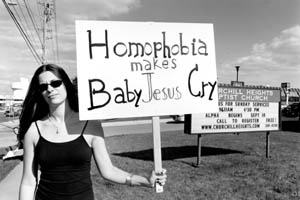
I want to talk about bigotry. And racism. And make plain something that isn't obvious.
This is a difficult topic to broach. Whenever you talk about racism or homophobia people just want to ignore it or rationalize it or accuse people of being "over sensitive." No one wants to be a racist. And no one wants to be bigoted.
When I tell them I think the church is bigoted, homophobic, prejudiced, whatever name you want to call it, they think of the worst expressions of that. And that's plainly there. I grew up in the Central Valley of California, and I heard plenty of that from my friends at church, or even from adults. I was there for the fundraising of Proposition 22 (the earlier incarnation of Prop 8) that happened in Stake Priesthood meetings. And the things said even over the pulpit were inconsistent with followers of Christ. When I moved to Utah, any semblance of civility was swept away as people bashed gays during Prop 8.
I've had a bishop apologize to me because he said he would like to dedicate a fifth sunday to the topic, but was worried about the kinds of things people would say (as in discriminatory things) if the topic were brought up. I think he's right.
And yet, I believe that the majority of bishops, and members of the church wouldn't react in such a negative way. That isn't the problem. The problem is actually in denying the existence of homosexuality. This is a much subtler form of homophobia. To ask members to deny the existence of a gay identity, to ask them to love the sinner but hate the sin, to talk about "so-called gays and lesbians" is derogatory.
Why? Why should I want to take a phenomenon, a physical, sexual, romantic, emotional attraction to the same sex and label it, identify it? That's legitimizing it, making it normal, making it natural.
Exactly. This is what the church wants to avoid. What members are taught to shun. For example, Elder Oaks in his Q&A with Elder Wickman told parents they shouldn't have to accept a visiting partner because that would grant legitimacy to such a union, and that's unfair to the parents.
Is it? To recognize that your son or daughter is in love, even if you don't agree with "such a union", is that unfair? Is that wrong? It isn't. It's what I would hope anyone would do.
One day after a particularly difficult discussion with my cousin about me being gay, I asked myself, do I exist? Of course I exist, and of course this part of my identity exists, but in their minds and in the minds of many in the church, my purpose is to procreate and be bonded to a woman. That is the purpose of life. And if I can't do that, I don't exist on the same level as my friends and family who can do that. That's frustrating.
During this discussion my cousin told me, "You just think that you're gay. Try not to think about it so much. It's like an alcoholic thinking about alcohol" I'll admit, as will many of you, that I'm guilty of over thinking. Of worrying about it too much. Of stressing about what people would think if they knew.
But that isn't what she meant. She was talking about if I could think I was straight, I would be able to be straight. "As a man thinketh.." Or something like that. But really? I was married three years. Many other people have been married longer than that. If I could think myself straight I would have.
But you can't. I can't undo biology, or the complex interaction of physiological and psychological processes. It's unethical to try (and believe me, people try, and have all kinds of advice on how to do so). Imagine, taking a straight man, and making him gay by sexual experience, by getting at the root of his "opposite sex attraction", of telling him that God loves him even though he struggles with opposite sex attraction, that he just shouldn't think about it so much, that he should marry a man anyway if the right guy comes along.
I think this would be fascinating. Fascinating, but unethical. There are standards for therapy and there are standards for experimentation. We also wouldn't show the man pictures of naked women and shock his genitals until he turned gay. Or lobotamize him (See The Mormon Proposition). Or alter his physical body or attempt to screw with his psyche to get him to change his sexual orientation. Or make lame analogies about dragons (see Jeffrey Robinson...or don't.)
Guess what? When you sleep, when you dream, it's there. Subconsciously, no matter how hard you try, your need, your desire to be with a man is there. It's what you want. And it isn't wrong. It isn't sinful. It just is. And it's going to be there the rest of your life.
One of the saddest things is that we gay men internalize the homophobia and repeat it. I'm guilty of this. For years I participated in it. And I apologize for it.I hope that I can overcome it fully. Because when you deny yourself what you want, you make sure others can't have it. Or when you indulge in self-loathing and shame because you are gay, that shows in the way you hate others. Sometimes this is subtle too. People can be compassionate and still be against "acting on same-sex attraction", but there's a subtle jealousy there, a subtle desire to have what they have, and it shows in how strongly they react against it.
I believe in the gospel of peace and love. And homophobia in any form is inconsistent with this. So is racism. As time goes on, the parallels between the two become more and more obvious. I'd like to see this change in the church. I'd like to be part of it, but as they say it's important to put your own oxygen mask on first. Or in more Mormon terms, it's important to handle your own stewardship and provide for your own emotional health and that of your family first before helping others. I can and must forgive, but that isn't the same as tacitly accepting it over and over and over again. I can't intentionally subject myself to it like I have been. Not now that my eyes are open.
Monday, August 29, 2011
Therapy (Again)
Today was my last appointment with the therapist I've been seeing for the last 7 months.
I stepped into the university counseling center in January of this year. The first day they asked me to fill out a survey. I was asked to identify my sexual orientation on the survey and state my reasons for coming to counseling. I didn't quite know what to say. I checked the box that said "questioning." I put I was there because of my sexual orientation as well as for depression. It wasn't as if I didn't know that I was attracted to men. So I didn't know if "questioning" or gay or bi was the right word for a formerly somewhat out gay man who tried to change his sexual orientation and was currently married.
I went in because something in my life wasn't right. My wife and I had moved to California, and the last couple of months had been hard. I'd stay up late crying. I pulled out the evergreen manual wondering if there was something in there that could help me. I didn't seem to find resolution or answers. Finally in January I told my wife, "I'm gay. I know I told you before, but there's more to the story than when I first told you."
We hadn't talked about it since I told her right before we got engaged. I wrote a letter. I had her read it, and then we talked about it. I told her in that letter I'd realized this was something I couldn't change. I told her I thought about doing therapy, but I was worried that they would convince me I was gay, or convince me to do something against the teachings of the church. Even though we were worried about that, we decided it'd be best if I went to therapy anyway.
So as I sat telling my counselor about how I'd gone to evergreen and how I'd gone 10 years since then avoiding a "Gay lifestyle" she seemed surprised. I told her though that I'd realized recently that no, my efforts to diminish my same sex attraction hadn't worked. I was still as attracted to men as I ever was. In all that time, I wasn't exactly in denial about being same-sex attracted, but I just sort of put it in a unresolved box that said, someday God will take this away. Confronting the reality that it wasn't going to change was difficult for me.
The next time we met, she pulled out a paper with a scale on it and explained that sexuality is complex and not as simple as gay/straight. I told her how much I loved my wife, but how I wasn't sure what to do about the fact that I was sexually attracted to men.
I didn't know exactly what I felt for my wife. Was I gay? Could I be in love with a woman as a gay man? As the weeks went on, we explored this conflict that I felt between having sex with a woman but being attracted primarily to men. It didn't really make sense to me at first. I thought, is she telling me it doesn't matter that I'm attracted to guys and married? She said she understood why I would feel a conflict. But in my way of seeing the world, I just didn't get it at first. It took some time, and education to learn what sexual orientation was, what "being gay" meant.
Contrary to what I feared originally, never once did my therapist tell me what to do, or convince me to be gay, or live any lifestyle. But as I went into this space where I was free to talk about what I wanted, what I was feeling, I realized for myself I felt a lot of conflict about being married. I was somewhat uncomfortable saying I was gay or bi, but accepting that my same-sex attraction was natural was affirming. I became more comfortable saying I was gay over time, because it was a way to view myself as a whole rather than shoving my "same-sex attraction" into a box that read "wrong, evil." I'd been told my whole life that somehow I was deviant, or unnatural. But finally I wasn't.
Therapists tend to affirm you as an individual.I don't believe this is wrong. She was with me and understanding and affirming when I talked about my conflict. But she never convinced me to label myself as gay, live a gay lifestlye, divorce my wife, or anything. My LDS therapists were for the most part unaffirming. They denied that I was gay, and lead me to do the same. They did steer me toward what they thought I should do. This is at least somewhat unethical. A therapist is supposed to do what the client wants. To try and push your client a certain direction because of your personal view point is, according to my understanding, against the standards of the profession.
As I came to an understanding that it was alright that I was gay, something I'd felt myself in prayer, then I had to figure out where to go from there. Being gay and married is not something I'd ever really come to terms with. I'd always lived believing that being gay was something wrong, and that my same-sex attraction was something that would someday be changed. The attractions and feelings were to be changed suppressed, ignored, prayed against, and I believed God would help me overcome them.
He didn't. He lead me to understand it isn't wrong to be attracted, sexually or otherwise, to men. It's not my fault that I am, it's not because I had gotten too close to my Mom, or because of abuse, or any reason other than it just was.
Sometimes people ask, well, you seemed to deal with being Mormon and gay and married really well for a while didn't you? What changed? I can't say exactly. It's hard to explain. I think after enough years of having my interest piqued every time a gay themed story, or movie, or book, or even lesson in church came up, it gets to the point where you can't ignore it anymore. After enough years beating yourself up because you notice a good looking guy, or noticing how you don't check out the pretty girl down the hall, or in a movie, you can't help feeling different. You can't help but start to question your choices, and the path your life is on.
So what do you do about it? I think a lot of things. I think we all have to make our own decisions and live with our choices. A healthy way seems to be to say, I'm attracted to men. Awesome. And then move on. Or saying, I'm attracted to this guy, we like each other, I'd like to see where this goes. An unhealthy way seems to be to try and root it out, beat yourself up for it, seek for causes and roots, and reasons that are invalid. It's pretty disappointing when after years and years of believing a lie, you confront the reality of that.
I don't believe that everyone in a "Mixed orientation Marriage" should just get divorced. I don't even believe that everyone with "same-gender attraction" should resign themselves to celibacy to stay in the church or leaving the church to have a relationship with a same-sex partner. We're all different. Human relationships and human sexuality is so complex. At the same time, I don't believe that it's healthy to just ignore conflict, ignore the way it affects the sexual relationship and other aspects of a relationship. I think honesty before marriage and during marriage goes a long way. I don’t know if that’s enough, but it helps avoid a lot of heartbreak down the line. Being honest with yourself and others is one of the most important things. For me and my wife it wasn’t enough. I don’t have the answers for other people, I just know for myself what I’ve lived and been through.
I stepped into the university counseling center in January of this year. The first day they asked me to fill out a survey. I was asked to identify my sexual orientation on the survey and state my reasons for coming to counseling. I didn't quite know what to say. I checked the box that said "questioning." I put I was there because of my sexual orientation as well as for depression. It wasn't as if I didn't know that I was attracted to men. So I didn't know if "questioning" or gay or bi was the right word for a formerly somewhat out gay man who tried to change his sexual orientation and was currently married.
I went in because something in my life wasn't right. My wife and I had moved to California, and the last couple of months had been hard. I'd stay up late crying. I pulled out the evergreen manual wondering if there was something in there that could help me. I didn't seem to find resolution or answers. Finally in January I told my wife, "I'm gay. I know I told you before, but there's more to the story than when I first told you."
We hadn't talked about it since I told her right before we got engaged. I wrote a letter. I had her read it, and then we talked about it. I told her in that letter I'd realized this was something I couldn't change. I told her I thought about doing therapy, but I was worried that they would convince me I was gay, or convince me to do something against the teachings of the church. Even though we were worried about that, we decided it'd be best if I went to therapy anyway.
So as I sat telling my counselor about how I'd gone to evergreen and how I'd gone 10 years since then avoiding a "Gay lifestyle" she seemed surprised. I told her though that I'd realized recently that no, my efforts to diminish my same sex attraction hadn't worked. I was still as attracted to men as I ever was. In all that time, I wasn't exactly in denial about being same-sex attracted, but I just sort of put it in a unresolved box that said, someday God will take this away. Confronting the reality that it wasn't going to change was difficult for me.
The next time we met, she pulled out a paper with a scale on it and explained that sexuality is complex and not as simple as gay/straight. I told her how much I loved my wife, but how I wasn't sure what to do about the fact that I was sexually attracted to men.
I didn't know exactly what I felt for my wife. Was I gay? Could I be in love with a woman as a gay man? As the weeks went on, we explored this conflict that I felt between having sex with a woman but being attracted primarily to men. It didn't really make sense to me at first. I thought, is she telling me it doesn't matter that I'm attracted to guys and married? She said she understood why I would feel a conflict. But in my way of seeing the world, I just didn't get it at first. It took some time, and education to learn what sexual orientation was, what "being gay" meant.
Contrary to what I feared originally, never once did my therapist tell me what to do, or convince me to be gay, or live any lifestyle. But as I went into this space where I was free to talk about what I wanted, what I was feeling, I realized for myself I felt a lot of conflict about being married. I was somewhat uncomfortable saying I was gay or bi, but accepting that my same-sex attraction was natural was affirming. I became more comfortable saying I was gay over time, because it was a way to view myself as a whole rather than shoving my "same-sex attraction" into a box that read "wrong, evil." I'd been told my whole life that somehow I was deviant, or unnatural. But finally I wasn't.
Therapists tend to affirm you as an individual.I don't believe this is wrong. She was with me and understanding and affirming when I talked about my conflict. But she never convinced me to label myself as gay, live a gay lifestlye, divorce my wife, or anything. My LDS therapists were for the most part unaffirming. They denied that I was gay, and lead me to do the same. They did steer me toward what they thought I should do. This is at least somewhat unethical. A therapist is supposed to do what the client wants. To try and push your client a certain direction because of your personal view point is, according to my understanding, against the standards of the profession.
As I came to an understanding that it was alright that I was gay, something I'd felt myself in prayer, then I had to figure out where to go from there. Being gay and married is not something I'd ever really come to terms with. I'd always lived believing that being gay was something wrong, and that my same-sex attraction was something that would someday be changed. The attractions and feelings were to be changed suppressed, ignored, prayed against, and I believed God would help me overcome them.
He didn't. He lead me to understand it isn't wrong to be attracted, sexually or otherwise, to men. It's not my fault that I am, it's not because I had gotten too close to my Mom, or because of abuse, or any reason other than it just was.
Sometimes people ask, well, you seemed to deal with being Mormon and gay and married really well for a while didn't you? What changed? I can't say exactly. It's hard to explain. I think after enough years of having my interest piqued every time a gay themed story, or movie, or book, or even lesson in church came up, it gets to the point where you can't ignore it anymore. After enough years beating yourself up because you notice a good looking guy, or noticing how you don't check out the pretty girl down the hall, or in a movie, you can't help feeling different. You can't help but start to question your choices, and the path your life is on.
So what do you do about it? I think a lot of things. I think we all have to make our own decisions and live with our choices. A healthy way seems to be to say, I'm attracted to men. Awesome. And then move on. Or saying, I'm attracted to this guy, we like each other, I'd like to see where this goes. An unhealthy way seems to be to try and root it out, beat yourself up for it, seek for causes and roots, and reasons that are invalid. It's pretty disappointing when after years and years of believing a lie, you confront the reality of that.
I don't believe that everyone in a "Mixed orientation Marriage" should just get divorced. I don't even believe that everyone with "same-gender attraction" should resign themselves to celibacy to stay in the church or leaving the church to have a relationship with a same-sex partner. We're all different. Human relationships and human sexuality is so complex. At the same time, I don't believe that it's healthy to just ignore conflict, ignore the way it affects the sexual relationship and other aspects of a relationship. I think honesty before marriage and during marriage goes a long way. I don’t know if that’s enough, but it helps avoid a lot of heartbreak down the line. Being honest with yourself and others is one of the most important things. For me and my wife it wasn’t enough. I don’t have the answers for other people, I just know for myself what I’ve lived and been through.
Subscribe to:
Posts (Atom)